Thursday, December 12, 2013

The Lost World of Bletchley Park and Woolton Vegetable Pie


On August 15th, 1939 something began to happen at an odd, Victorian-Gothic-Tudor-Dutch-Baroque mishmash of a house in Buckinghamshire called Bletchley Park. It had been owned for many years by the Leon family but was quietly absorbed by the government as WWII broke out.


What happened next was astonishing. Thousands of people, some of them geniuses in math, science, engineering, languages, classics, cryptology, chess and even Papyrology along with legions of bright young women all descended on a sleepy little town to work for Ultra (named for the highest security clearance, known as the Government Code and Cypher School (GC&CS)). What they did there shortened WWII by at least 2 years. Winston Churchill believed "It was thanks to Ultra that we won the war." Ultra broke the German code.

The Book, The Lost World of Bletchley Park: An illustrated History of the Wartime Codebreaking Centre by Sinclair McKay was absolutely riveting (McKay also wrote the very successful The Secret Life of Bletchley Park: The WWII Codebreaking Centre and the Men and Women Who Worked There). I found myself reading late into the night, unable to put it down.  I didn't know anything about most of the main players in the story –– they need to be honored by us all.


Commander Alistair Deniston  had been instrumental in setting up Room 40, the British cryptoanalysis department in WWI responsible for successfully decoding German messages received by the interception service known as ‘Y’ Service. He came onboard to set up Bletchley Park.


Alfred Dillwyn Knox, “Dilly” as he was known, was another early player in the game beginning in Room 40  and later a prime mover at Bletchley Park. He was notorious for getting his best ideas in the bath and would soak for hours running problems.


Knox fortuitously bought an Enigma machine in Vienna in 1925, immediately recognizing its value as a tool for spycraft (it was originally used in business for stock coding not for espionage –– you can read about the way the machine worked HERE). He kept his hand in the spy business between the World Wars and with Denniston,was called upon to meet with Polish cryptographers in 1939 when WWII was heating up. The Polish team had made the first breakthrough in decrypting the German Enigma machine’s code but didn’t have the facilities to proceed further when the Germans added another level of complexity to the machine.

 It was under Knox's watchful eye that all the Bletchley players were brought together to tackle the impossible problem. Sadly, he died of cancer in 1943 before victory was achieved but he died knowing his ISK (Intelligence Services Knox) had saved thousands of lives and decrypted 140,800 messages.


Filled with photographs, the book details setting up the facility and then tells the many stories of the participants in the endeavor, especially the unknown stories of some of the women who, until recently, were faceless heroes (the oaths taken to the Official Secrets Act were only recently allowed to be violated so that their story could be told ­­–– many men and women died with even their loved ones thinking they were war slackers when nothing could have been further from the truth).


It's about time people knew of the contributions that were made. Women made up the lion’s share of the workers at Bletchley. They worked around the clock putting in code that came from thousands of encrypted messages searching for patterns and finessing the perpetually breaking  Bombe tapes and then the slightly more stable Colossus tape. The Colossus was the first computer prototype, capable of running thousands of points of information at once (and constantly requiring maintenance to keep them running). These machines helped to break both the Enigma code and the even more complex Lorenz cypher written on SZ machines.

Max Newman

Tommy Flowers

The Colossus machine was developed by mathematician Max Newman and built by engineer Tommy Flowers (Alan Turing also had a hand in it). Ironically, because of the Official Secrets Act, engineering genius Flowers couldn’t get a loan to build a computer from the Bank of England after the war. The bank didn’t think it would work –– he couldn’t tell them he’d already built quite a few of them.

a replica of a bombe –the originals were destroyed

The bombes were originally designed by the Polish but perfected by Alan Turing  who was actually the first member of the Bletchley team that everyone knew about –– for rather sad reasons.

Alan Turing

After the war, he was brought up on an indecency charge after reporting a small burglary. He admitted to being gay and was convicted of gross indecency. All of his security clearances were revoked. It was a shameful that a man that had done so much for his country could be treated so poorly (his conviction has yet to be overturned - as of Christmas Eve 2013, Alan Turing has been pardoned by the Queen, hip hip hooray!). None of his work could be revealed because of the Secret’s Act. There’s a powerful play and film about him called Breaking the Code with Derek Jacoby in the title role (Turing died at 41 of a suspected suicide –– supposedly he ate an apple laced with cyanide). The Apple Company was thought to have alluded to this when they created their logo but Steve Jobs denied it saying to Stephen Fry, “God, we wish it were.” Time Magazine included Turing in their list of the 100 most important people of the 20th century, saying "The fact remains that everyone who taps at a keyboard, opening a spreadsheet or a word-processing program, is working on an incarnation of a Turing machine."

For all of their work, the codes would never have been broken with out a few slip-ups by the Germans.


Computer expert, Tony Sale wrote an article about one of the most important slip-ups, one that helped to break the Lorenz code. The article was summarized in Wikipedia,

“On 30 August 1941, a message of some 4,000 characters was transmitted from Athens to Vienna. However, the message was not received correctly at the other end, so (after the recipient sent an unencoded request for retransmission, which let the codebreakers know what was happening) the message was retransmitted with the same key settings (HQIBPEXEZMUG); a forbidden practice. Moreover, the second time the operator made a number of small alterations to the message, such as using abbreviations, making the second message somewhat shorter. “From these two related ciphertexts, known to cryptanalysts as a depth, the veteran cryptanalyst Brigadier John Tiltman in the Research Section teased out the two plaintexts and hence the keystream. Then, after three months of the Research Section failing to diagnose the machine from the almost 4,000 characters of key, the task was handed to mathematician Bill Tutte. He applied a technique that he had been taught in his cryptographic training, of writing out the key by hand and looking for repetitions. Tutte did this with the original teleprinter 5-bit Baudot codes, which led him to his initial breakthrough of recognising a 41 character repetition. Over the following two months up to January 1942, Tutte and colleagues worked out the complete logical structure of the cipher machine. This remarkable piece of reverse engineering was later described as "one of the greatest intellectual feats of World War II"

The code was broken because of mistakes but also because of a particularly heroic dive into sinking German sub U-559 by Tony Fasson and Colin Grazier in 1942. The men knowingly risked their lives to rescue the German codebooks. The ship sunk with them still in it when, in a mad act of heroism, they went back in for the code machine. “These books in essence, gave them an express route into unlocking the four-letter indicators, and thence each day’s Enigma setting….Within just one hour of their first decrypts flowing through, intercepts of U-boat signals were sent through to the Admiralty, enabling them to instantly pinpoint the positions of fifteen U-boats.”

Dorothy Hyson with George Formby

Of the women at Bletchley Hall, a few are now known. One was a famous movie actress named Dorothy Hyson. Jane Fawcett went on to become a well-known architectural historian (she called Bletchley “a dump”). Mavis Batey wrote a book about the experience Dilly: The Man Who Broke Enigmas and was known as one of “Dilly’s Fillies”. There was also Jean Valentine who still lectures at the site (you can see here HERE) plus many famous "debs" of the day like Osla Henniker-Major, Sarah Baring, Jean Campbell-Harris and soon novelist, Rosamunde Pilcher. Many went on to live quiet lives as mothers and homemakers who had a secret exciting past.  Many felt life after their service was a let-down.

Bletchley's really a rich source of material for the page or the stage.  In addition to Breaking the Code, there was a great drama, The Bletchley Circle on PBS last year that gave you a hint of the before and after lives of the women who worked there as well as a 2000 film, Enigma with Kate Winslet playing one of the women who worked on the project who gets involved in a suspense-filled plot.

Aside from the extraordinary stories of brilliant deductions, breakthroughs and brain-breaking work that happened at Bletchley, there’s also the story of the way they lived in the complex.


Although the girls eventually came from all social levels, the first on site were debutantes, "Preceding the Wrens at Bletchley had been an influx of debutantes.  In the earliest days of Bletchley Park, it was initially felt by some at the Foreign Office that women would be better off kept out of it altogether, on the grounds that ladies were  notoriously bad at keeping secrets.  This stance, which seems hilariously patronising now, was modified a little to allow for rather smart girls, many with titles, to be recruited for the more grindingly routine (yet absolutely vital) work of card indexing.  The girls were hooked in via the Establishment social network and came, as one veteran said, from the better sort'  of families." Of their many virtues (like the charming tradition of always wearing pearls), many could speak a few languages thanks to schooling overseas and grand tours. They worked tirelessly to translate the messages.


The workforce was housed in mostly very crude ‘huts’ on the premises, dormitory-style.  Some lucky workers were housed by local families (sometimes with  amusing results) in everything from tiny cottages to regal estates –– Woburn Abbey  was a particular favorite. Work was grueling yet people’s memories of Bletchley are, for the most part, positive and fond. People knew they were doing the most important work of their lives saving their nation. Many remembered it as the high point of their lives.

There were plays and dances to relieve tensions as well as outdoor activities like bike riding and games.  There were even sun rooms to provide vitamin D for the night workers. Not to say there weren’t complaints. Food, because of rationing and almost always dire institutional cooking practices, was a source of many jokes and complaints (hours on a steam tray could make anything inedible).

At the beginning of Bletchley, a chef from the Ritz was drafted to cook for the brain-trust. They ate in an elegant dining room with waitress service. As the operation grew, a cafeteria was built with American-style self-service. A classless hierarchy developed , “ It came to symbolize another important aspect of life at the Park and that was the apparent lack of fixed hierarchy. Bletchley veterans who had been among the younger codebreakers recalled how, after a grueling all-night shift, one could go for breakfast and find oneself sitting next to a colonel on one side, and an American major on the other, with no sense that lower ranks had to take themselves elsewhere. All mingled as equals; and faced the equally daunting prospect of Woolton pies (a rationing invention which involved dispensing with the meat element and adding in a great many root vegetables), tarts that tasted of ‘cardboard’ and the very occasional meal where a salad came inadvertently garnished with some dead insects. The cafeteria staff were also very sharp and strict about portions control.”

Aside from the particularly toxic image of “liver swimming in water”, Woolton pie was the food star of the book. Nothing symbolized wartime rationing like a Woolton pie.

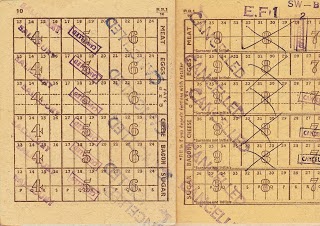

I think we forget about how bad things were for Britain. Rationing didn’t end till 1954.

The King and Queen lived by the same rationing rules and so did Bletchley.


I read, “At the start of World War II (1939), the United Kingdom imported 20 million long tons of food per year (70%), including more than 50% of its meat, 70% of its cheese and sugar, nearly 80% of fruits and about 70% of cereals and fats.” This astonishing fact led to incredible rationing and a whole new way of eating and growing one's own food.

The Carrot Museum said that the Woolton Pie was, “Introduced in May 1941, it continued to raise a hollow laugh throughout the war. In fact, Woolton Pie was far from being a laughing matter. Lord Woolton, Britain's wartime Minister of Food, charmed and cajoled the public into eating not only Woolton Pie but a 'National loaf…."

"Apparently neither the pie or the [vegetable] loaf were liked, but by the end of the War, the country was fitter and healthier than it ever had been.”


Here is the original recipe for the pie, published in the London Times:


The dish is fairly easy to make. I found a few recipes for low-fat potato whole wheat crust – one with grated potatoes and the other with mashed –– I went with mashed but you can do the straight whole wheat if you would –– I was curious about the potato crust.  It turned out to be delicious but not the texture I'm used to in a crust.  It would be even better with a bit more butter (but then what isn't?).

I don’t like Marmite but you can use it.  If you want to go vegetarian, stick with the Marmite and use water or vegetable stock. All in all, a very tasty dish that is inexpensive and good for you.  It kept the Bletchley staff well-fed and able to work their hearts out for the war effort.

From the Saga site I read that Woolton pie was, “Invented by Savoy maître-chef François Latry (1919-1942), and named after the Minister for Food, Lord Woolton. It was offered on Savoy Restaurant menus, and was intended to be a dish created by a Savoy chef, which ordinary housewives could recreate in their own homes in spite of the rationing restrictions. This recipe has been translated from an original Savoy Restaurant kitchen copy”


Woolton pie from the Savoy Restaurant Kitchen (with some changes) 

Ingredients

• 1 lb potatoes – King Edward [I used 1/2 lb of purple potatoes]
• 2 lbs carrots [I used 1/2 pound and added 10 oz of rutabaga and 8 oz cauliflower]
• ½ lb mushrooms
• 1 small leek
• 2oz margarine or chicken fat [I used 2T duck fat and 2 T butter
• 2 spring onions
[I added 2 T oatmeal and 2 1/2 c chicken stock –– you should put in as much stock as suits your dish]
• Salt, pepper, nutmeg, chopped parsley (I added the parsley as I served)

• Bunch of herbs made of 1 small bay leaf, 1 small sprig of thyme, parsley and celery

Method

Peel the potatoes and carrots, cut them into slices of the thickness of a penny. Wash them well and dry in a tea-cloth. Fry them separately in a frying pan with a little chicken fat.  Just brown them, they will cook in the crust.

Do the same for the mushrooms [sliced], adding the finely chopped onions and [sliced] leek. Mix them together and season with salt, pepper and a little nutmeg and roughly chopped fresh parsley.

Fill a pie-dish with this mixture, placing the bundle of herbs in the middle. Moisten with a little giblet stock or water. Allow to cool.[* I tossed in the oatmeal from the official recipe.] Cover with a pastry crust made from half beef-suet or chicken fat and half margarine. [*I used the potato crust recipe.] Bake in (a moderate) oven for 1½ hours. [* I baked it for an hour –– 400º for 10 minutes and 375º for 50 minutes.  I put foil around the fluted crust to keep it from burning since it has little fat to protect it].

I used this recipe for the crust from Lavender and Lovage:

Potato Wholewheat Crust

2 ozs (50g) white vegetable fat
 ( I used 1 oz duck fat and 1 oz butter
8 ozs (225g) wholemeal flour

1 Teaspoon Salt

8 ozs (225g) cooked cold mashed potato

1 tablespoon milk

Method:

Rub the fat into the flour, stir in the salt and work this mixture into the mashed potato, adding the milk a little at a time.

Knead on a floured board until the dough is smooth and fairly soft. Roll out the pastry and use according to recipe. (Use as required. This pastry is normally baked at 200 °C / 400

Or, you can make this wheatmeal crust from the Savoy:

Recipe for wheatmeal pastry (for Woolton Pie)

• Blend 8oz (22g) plain wheatmeal flour with ½ teaspoon salt and 1 teaspoon baking powder.

• Rub in 2oz (50g) margarine or cooking fat or dripping, then add enough water to make a rolling consistency, although one that is slightly softer than when making pastry with white flour.

Roll out and use as in the individual recipe.

Or, try this recipe from Lavender and Lovage :


Woolton pie from the Official Recipe

1lb (450g) diced potatoes

1lb (450g) cauliflower 

1lb (450g) diced carrots

1lb (450g) diced swede

3 spring onions

1 teaspoon vegetable extract

1 tablespoon oatmeal – I used 2 tablespoons

A little chopped parsley

Cook everything together with just enough water to cover, stirring often to prevent it sticking to the pan. Let the mixture cool. Spoon into a pie dish, sprinkle with chopped parsley.
 Cover with a crust of potatoes or wholemeal pastry. 
Bake in a moderate oven until golden brown.
 Serve hot with gravy*.

*Brown Gravy can be made with onion carmelized in butter or lard or the fat from pan drippings. Then add flour, the browned pan drippings and stock. Add a dash of Worcester if you would like. During the war it was often made with onion, water and flour as meat drippings were in short supply.


*****Tis the season to give to WIKIPEDIA.  All of us who write use it. I have used it madly in this article and am terribly grateful. They don't make much money, they do it for love, donate, won't you?  Just click HERE to do it.


Follow Me on Pinterest

Wednesday, December 4, 2013

For the Downton Starved –– England's Lost Houses and Creamy Sweetbreads in Pastry


The first time I saw a room that had been “abducted” from a stately English home and reconstructed in an American museum I was horrified.  I thought it personified the “ugly American" –– stealing old world treasures with new Robber Baron money. The truth wasn't that simple.  Often, there was no villain in the story, often it involved tragedy.

Sure, some stupidly wealthy Americans bought rooms from desperate lords – ripped them out of family houses and carted them away, “Hey, love what you’ve done with the place, what will you take for it?” –– but many individuals and museums came to the rescue when houses were burned and/or about to be demolished for lack of funds or interest. For every Lord Grantham struggling to save Downton and the family heritage, there's a Lord who's sick of all the trouble and crippling expense.


Think of the Cassiobury Staircase at the Metropolitan Museum of Art –– it could have been firewood.

Stairs in the original Cassiobury house, Country Life Photo 1910


The 1922 sale at Cassiobury went on for 10 days with 2,606 items. (by the 6th day, £27,987 had been raised). The Met and Chicago’s Art Institute divided up the Grinling Gibbon’s carvings with Luton Hoo.

The house was demolished in 1927 but not before “300 tons of old oak: 100 very fine old oak beams and 10,000 Tudor period bricks” were removed and sold to build or restore other homes (including a new Cassiobury in Bedford NY). Evidently trade in house parts has its own long tradition beginning at least in 1682 when Nonesuch Palace was stripped for parts. A great article in Country Seat tells the tale of many famous house dismemberments noting that in 1900, Country Life Magazine was listing rooms and parts of rooms available for purchase to add authentic parts to newly constructed Gothic and Tudor palaces. There’s a great book by curator John Harris on the subject of moving the rooms, aptly called –– Moving Rooms (the Guardian wrote about the book HERE).

On top of that a book by John Martin Robinson's poignantly titled, Felling the Ancient Oaks: How England Lost its Great Country Estates came out last year. It recorded the demise of great estates that were often replaced by office parks, subdivisions,  highways and golf courses.

All this came to light when I got a copy of England's Lost Houses.

I was lost for days. The Guardian said of the book, “‘This grave compilation of Country Life photographs of great houses, burned, stripped, wrecked, demolished and otherwise ruined since 1900 feels like an illustrated supplement to English fiction, high and low, over the same period… Haunting.”

 I loved this book.

Hovingham Hall, 1994 Country Life

No wonder –– the author, Giles Worsley (1961-2006), was an architectural writer, critic and former editor of Country Life. He was also “to the manor born”, being the 2nd son of a Baron and nephew to the Duchess of Kent who grew up in the not too shabby Hovingham Hall. Tragically, he died of cancer at 44. In that short time he accomplished quite a bit. After Eton and Oxford he got his PhD at the Courtauld Institute of Art (also attended by Vincent Price who I wrote about HERE). In his short life he wrote prodigiously with fine works on Regency Drawing, Inigo Jones and a highly respected work,  Classical Architecture in Britain: The Heroic Age that I have on my Christmas list.

Hovingham Hall, 1994 Country Life

Hovingham Hall, 1994 Country Life

The Guardian obituary wrote, “Worsley faced his final days without fear or self-pity, with quiet and determined courage and with a gentle, tender solicitude for those he loved. He died far, far too young; but he had accomplished more than many achieve who are granted twice his mortal span. He will be buried today at Hovingham, the place which, along with his forebears and his family, was the abiding inspiration of his wholly admirable life.”

The book is so fine because of his bred-in-the-bone connection to these houses  –– that and his access to the astonishing collection of photos from Country Life’s archives (available online, bless them).

The sad fact is nearly 1/3 of the great houses of England have been destroyed –– some with nary a trace. Since 1900, at least 1,200 homes have been lost –– why?  Worsley wrote,  “The answer seems obvious, at least in folk memory. High taxation, and above all death duties, coupled with the tragic loss of aristocratic heirs in two world wars, forced all too many landed families to sell their estates, leading to a wave of country-house demolitions that could, and should, have been prevented if only the Government had acted sooner.”

In 1955 alone, 38 houses were demolished. Depressed agricultural markets, fires, wars and profligacy also contributed to the demise of the great English house.

Rufford Abbey ruins today

People often put up quite a fight to save them but houses like Rufford Abbey lost in the end –– it was mostly demolished in 1956. The “Town and Country Planning Act” of 1947 could not save it (it began listing important properties and required them to announce demolition plans but their funds went to new developement). First estimates were a post-war fortune –– £60,000 for repairs –– but the Society for the Protection of Ancient Buildings (founded by William Morris in 1877) thought the figure could be as little as an emergency £400 with £11,750 to take care of the worst of the problems.

The house was certainly worth of saving. For one, it was ancient –– the oldest part of the house dated from 1146. For another, it was in a great location in the heart of Sherwood Forest. Because of that, after the abbey’s dissolution in 1536,  Rufford was used as a hunting lodge for hundreds of years. The downside was that it was huge, rambling because of centuries of add-ons and in terrible shape. In the end, the government wouldn't spend the money to save a wreck that was too far gone.  Postwar rebuilding took precedence over saving old houses.


Rufford Abbey, before being demolished 1956
Rufford Abbey exterior

Famous architect Anthony Salvin (who I wrote about HERE) carried out renovations in the mid 19th century (he specialized in Tudor-ish renovations) but that upgrade wasn't enough. The Saville family used it infrequently and sold it before WWII (during which it was used as a base for civil defense). The medieval and some of the 17th century parts of the house attached to them were saved (and still can be seen today) but the rest fell to the wrecking ball. It was a great tragedy.


Rufford Abbey Interior, Country Life, 1903

Rufford Abbey Interior, Country Life, 1903

Although never in danger of demolition, the Downton Abbey house, 
Highclere,  has had to struggle to stay afloat and in family hands. With an annual maintenance cost in the many millions, its future looked dim until the overwhelming success of the television program brought fame and fortune (they were set to sell off land to pay expenses, upper rooms in the house were falling apart). Estates supported by hefty fortunes are more secure because of additional attractions, like a game park at Longleat and thriving stores and restaurants at Chatsworth that lure tourists who in turn pour fresh money into the ancient family coffers. House tours alone would not give as plump a revenue stream. Now many of the great houses are owned by various trusts with the proviso that the family can stay there.  Most families can no longer afford to maintain them on their own.

It wasn’t until the “Town and Country Planning Act” of 1968 that the destruction came to an end (the previous 1947 act had no “teeth” and insufficient funds to pay for repairs). After that, owners had to seek permission to demolish their holdings and often aid could be found to repair or to bring it into the National Trust, English Heritage or other such organizations. Light was shone on the issue too with a remarkable 'Destruction of the Country House' exhibition, held at the Victoria and Albert Museum in 1974. People became aware of the plight of the old houses and money was raised both publicly and privately to do something about it.

I think it is a fine thing that house visits can be thought of as fun and enlightening – unlike say a family visit to a theme park. Instead of padding a corporation’s bottom line you contribute to maintaining and restoring national history.  It is heartening that a few hundred years from now, our legacy will not only be ruins of shoddy housing and plastic toys (although sad if that is all that will ever be produced from now on –– almost all of our great modern architecture will not survive for centuries).

The end of the book has a graveyard of demolished houses listing their date of death –– it's remarkably moving. That many families lost their heritage or died out contributes to the sense of loss and sadness one has when reading it. There are 60 or so houses in the book.  Many of the stories are fascinating –– here are a few of the Lost Houses to whet your appetite:

Park Hall in Shropshire was destroyed by fire in 1918:

Park Hall

Park Hall, Country Life 1905

Park Hall, Country Life 1905


Nuthall Temple, one of the finest Rococo interiors in Britain, went up in flames in 1929


Nuthall Temple, Country Life, 1923

Nuthall Temple, Country Life, 1923

Beaudesert had a sour fate.


Its young owner, the 5th Marquess of Anglesey was known as “the dancing Marquess. His mad ways and incredible spending habits went through a huge fortune in a few years throwing insane parties for his pals like Oscar Wilde and buying a king’s ransom in jewels for his fanciful self-adornment. He died at 30 in 1905 but his enormous debts (£544,000 – more like £30,000,000. today) left the ancient family’s finances in tatters. The house was sold for debts and demolished in 1935 after the fittings had been sold.

Henry Cyril Paget, 5th Marquess of Anglesey


All that remains of Beaudesert ––


Weald Hall was featured in Country Life 3 times in 1897, 1905 and 1914. The house was owned by the Tower family from 1759 until it was demolished in 1951 –– the owner wanted to move to a sunnier clime. Originally a Tudor house, part of it had been remodeled in the early 18th century and then the dining room was done by Robert Adam in 1778. Worsley noted (but did not show) that the first 2 Country Life features showed a thoroughly Tudor house with no hint of its Georgian character. The last, 1914 showing, had no hint of its Tudor past.

Weald Hall 1914 Country Life

Weald Hall 1914 Country Life

You will just have to buy the book to see more but for all of you who love history and houses, this is the book for you.

What to make to honor the old world? I decided to make something I’ve been wanting to do for ages. It’s an Old World dish that has fallen out of fashion but used to be on many a fine dinner table, –– sweetbreads in pastry.  It’s one of those recipes I tried eating at a very fancy French restaurant when I was young, it seemed terribly brave and sophisticated. The waiter's fractured-French/English explanation of what part of the cow it was eluded me but one part of the description stayed with me and still holds true –– imagine a scallop that’s not from the sea. Don’t be afraid of them. Although they take a bit of work –– they need to be soaked and weighed down the day before to get the sublime texture – after that they cook in a minute. You will be amazed at the result.  I got incredible sweetbreads from my friends at D'Artagnan –– they are the best.

My recipe was inspired by many great 19th century chefs from Escoffier to Queen Victoria's own chef, Francatelli (he did a recipe with the creamed and fried sweetbreads together sweetly titled Epigramme of Sweetbreads).  To add another recipe to my D'Artagnan sauce series, I thought I would use an Allemande sauce (velouté with a cream and egg yolk liason) for my base and add truffles for added luxury. The savory sautéed mushrooms add a great counterpoint to the creamy dish. Although you can buy puff pastry, you can make my favorite recipe with duck fat for added flavor.

Remember, sweetbreads do not keep.  Get them frozen or make them soon after you get them.

The end result –– delicately textured sweetbreads perfumed with truffle and madeira in a crisp pastry. After some prep (the pastry, sweetbreads and sauces can be made the day before), it can be thrown together in no time for a dinner party.  It doesn't get better than this.

For a toast, a special cocktail, perfect for the holiday –– a warm pomegranate drink with a creamy, honeyed frankincense froth using Aftelier Frankinsence essence. The result is brilliant and tastes like Christmas.


Sweetbreads Vol-au-vent, serves 6-8

1 pound D'Artagnan sweetbreads (recipe follows)
2 T D'Artagnan truffle butter or butter
1/4 c chopped mushrooms
1 large shallot, chopped
s&p to taste
1/2 t thyme
2 - 3 T madeira ( I used Rare Wine Company's Boston Bual with a little 1903 D'Oliveira Bual at the end -wow)
2 c Allemande sauce (recipe follows)
sliced D'Artagnan truffles (optional)
1 egg, beaten
1 c breadcrumbs (seasoned with thyme, s&p, cayenne)
1/4 c clarified butter
sauteéd mushrooms  (recipe follows)

Divide the sweetbreads.  Take the largest pieces (about 1/3) and keep for frying. Chop the rest into small-ish pieces (unless you are making large pastries and it doesn't matter).

Heat the butter in a skillet and add the shallot and chopped mushrooms.  Sauté till cooked and add the smaller sweetbread pieces. Cook for a few minutes and add the thyme and madeira.   Add the Allemande sauce and warm -- do not boil or the egg will curdle.  Keep covered and warm.

Take the larger pieces of sweetbread and dip in egg.  Roll in bread crumbs.  Dip in some of the clarified butter and roll in breadcrumbs again.  Fry in the clarified butter till brown.

Put the creamed sweetbreads in the cases.  Top with some truffle slices. Put the sauteed mushrooms on the plate with the fried sweetbreads and some of the sauce if you would like and serve.


Sweetbreads

1 lb sweetbreads
1 t salt

Soak the sweetbreads for an hour in water and drain well (some people like to do this in milk -- if so rinse them well before proceeding).

Put sweetbreads in water to cover.  Heat water to a bare simmer.  Turn off the heat and let the smaller piece of sweetbread stay in for 5-7 minutes and the larger one 10 - 15 minutes (check to see if they are ready - don't let them get rubbery).  Remove and cool.  Take the transparent membranes off the sweetbread (you can see the technique on the first 10 minutes of this video on YouTube). Put the sweetbreads on a plate, put another plate on top of it and weigh it down with heavy cans or bricks.  Refrigerate over night.

Velouté

3 T butter
3 T flour (sifted)
2 cup warm stock (chicken, duck or traditionally veal)
s&p to taste

Melt the butter, add the flour and stir over a low heat to cook the flour.  Do not let it color.  Add the stock slowly, stirring constantly.  When it is all mixed in, cook over medium heat for 15 minutes.
Strain.

Allemande Sauce

2 cups Velouté
1/4 c heavy cream
1 egg yolk
small squeeze lemon juice to taste

Combine the cream and egg.  Pour some of the warm velouté into the egg mixture and then pour that back into the rest of the velouté


Sauteéd Mushrooms

About 1 cup, sliced mixed mushrooms (D'Artagnan has a great mix HERE) 
1-2 T D'Artagnan truffle butter or butter
2-3 T demi-glace
pinch of thyme
splash of cognac
small squeeze of lemon juice
salt and pepper to taste

Saute the mushrooms in the butter.  Add the rest of the ingredients.


Puff Paste with Duck Fat (this is enough for 12-16 shells, you can half the recipe or freeze what's left)

Butter layer

1 lb + 3 ½ T (510g) cold unsalted butter (I love Irish butter for this)
2 t (10 ml Lemon juice
1 c (130g) bread flour
pinch of salt

Dough

3 c (400 g) bread flour (freeze it)
3 ½ T (55g) duck fat, frozen)
1- 1 1/2 t Salt
1 c cold water (start with 3/4 and add as needed, you may not need a whole cup)

egg wash

Mix the butter and the flour and lemon and salt into a paste, make a 6” square and chill on wax paper till firm

Make the dough as you would pasta, knead very sparingly and refrigerate.

Make the dough into a rectangle and put the butter in the center in a diamond... fold the dough around it like an envelope, bringing the 4 outer points to the center of the butter.   If it’s hot, chill. Otherwise roll it to a rectangle and fold it like a brochure and chill ½ an hour. Roll it out to a rectangle again and do it again 5 times, resting for 45 minutes to an hour in the fridge each time.

I left mine overnight after the last turn and rolled it out the next day. After cutting my rounds, I put it back in the fridge for an hour

Then you are ready to go!!!

Preheat the oven to 425º. Cut 3 1/2-inch rounds from the pastry. Cut a 2-inch circle in the center of each round. Do not twist and turn the dough. If you do you will lose your loft on the pastry. The cleaner the movement, the higher the pastry will rise.  Collect the rest of the pastry and roll out.  Cut
another round to match the first. Paint the bottom round with egg wash and prick with a fork.  Put the ring on top, matching the pattern if it has one.  Put egg wash on top of pastry being very careful not to spill it over the side –– it will keep the pastry from rising.

Bake on a parchment-lined baking sheet for 10 minutes with a buttered piece of parchment on top of the pastries—this helps them rise straight… don’t ask me how. Remove the top parchment and continue to bake 10 - 15 more minutes after turning the heat down to 375º or until puffed and golden.  Put on a rack and put back in the oven with the heat off and the door ajar.  This dries them out nicely.

*There's a great site with a tutorial on making vol-au-vents HERE


Warm Pomegranate Rum Cup for 4

1/2 c cream
2 T honey
10 - 12 drops Aftelier Frankincense essence or to taste
4 oz dark rum
2 cups pomegranate juice, warmed

Whip the cream.  Add the frankincense to a dish and then add the cream the honey –– do this to taste.  You can start with 4 or 5. I liked 12, it is not overpowering. Add the rum to the pomegranate juice. Put the cream on top of warm pomegranate juice and serve.


Tis the season to give to WIKIPEDIA.  All of us who write use it.  They don't make much money, they do it for love, donate, won't you?  Just click HERE to do it.


Tis the season for giving these great madeiras to your favorite cook, I love this stuff and use them in
everything.  Click HERE or ask for them at your favorite wine merchant.  For something special, I love their vintage madeiras too.  They are magic in food and last forever.


Follow Me on Pinterest