Thursday, October 11, 2012

Andalucia and a Brilliant Medieval Chicken Sausage


I found a recipe a while ago that I love.  It is a great chicken sausage from a 13th century Andalucian Cookbook that doesn’t use fat to get flavor –– WOW.  

When I think of Andalucian cuisine I think of Gazpacho and Ajo blanco (the white gazpacho that I wrote about HERE), honey pastries, tortillas, fried fish, ham and Sherry. You may not know that many of the iconic foods of the region were inspired by the rich and ancient cuisine of Africa and the Middle East.  


Andalucia is located at the southern end of the Iberian Peninsula.  Cordoba, Granada, Malaga and Seville are its best-known cities.  The area has a history that has been touched by the Romans, Vandals, Visigoths and Byzantines –– but the Moors left my favorite cultural footprint.


Their music, games, literature and science left an enormous mark but so did their architecture –– they left Andalucia some of the most remarkable structures in the world –– think lace made of stone.

Carl Curman Cynotype 1878

The name Andalucia comes from the word Al-Andalus (an Arabized version of Vandalusia – meaning land o f the Vandals).  The Moors governed the territory from 711-1492 (the word ‘Moor’ has many possible roots, from meaning dark to meaning coming from Mauretania).  The Moorish occupation had actually had some perks.  Cordoba had irrigation and streetlights in the 10th century.


One of the great wonders of the world, the Alhambra (Al-amra in Arabic – meaning ‘the red fortress’) was built between 1333-54 by Yusef I and Mohammad V in Granada.  Poets described it as “a pearl set in emeralds” because of the contrast between it’s formerly whitewashed lace structures (now an ecru to soft red color) set in a dense green wood originally planted with roses, oranges and myrtles that also provided perfumed air.  Nightingales and running water provided the soothing soundtrack. 


Wikipedia

The carved arabesques and tiles are what makes the magic.  Light plays on the structure in an astonishing way. 


The muquarnas (a stalactite-like decorative element first seen in Iran) became a central point of the ceilings in the Alhambra.

You can imagine such an elegant culture would have an equally elegant and complex cuisine and you’d be right.  It is a brilliant cuisine with subtle flavors.

An Anonymous Andalusian Cookbook of the Thirteenth Century (translation by Charles Perry and available online HERE) is quite a remarkable book that was written shortly before the Alhambra was  built. The recipes are exquisite.

This particular sausage is richly flavored without any added fat, nuts supply the rich texture –– making it a perfect sausage for today.  It is simple to make with a food processor –– you can make patties if you would like to skip the step of stuffing sausage casings.  The flavor and texture will surprise you.

The recipe was redone on Godecookery's site with lavender instead of spikenard,  a delicious substitution if you are not one of a handful of people who keep spikenard in their spice cabinets.  I made them both ways to see the difference.  The spikenard is a dark flavor and is very different from lavender.  If you want to have a closer flavor, I'd say dried mushrooms and a bit of oregano would come close.  They are delicious dunked in mustard.  

The apples are amazing. In the original dish the apples were added to a meat dish.  I decided to do the apples separately as a side to my sausages. Who knew saffron would be great with apples?   I can see these apples being used as a great side dish to pork, a thanksgiving turkey dinner or even a light dessert.


Andalusian Chicken Sausage from the 14th Century for 3 or 4


1 1/4 oz almonds
1 1/4 oz walnuts
2 T pine nuts
1/2 t caraway seeds
1/2 t cinnamon
1/2 t black pepper
1 t salt
1/2 to 1 t lavender (crushed) or 1/2 t spikenard 
1 pound boneless, skinless chicken thighs, chopped in big chunks
1 T honey
1 egg
sausage casings
oil for frying

Put the nuts and spices into the food processor and chop till well ground (or to taste--- less if you want them chunkier)

add the meat, honey and egg and process till well ground.

Put the sausage in the casings as your machine requires (I use a Kitchenaid attachment) or make into patties or rolls... the mixture will be very moist.

If you have made sausages, simmer them for 20 minutes then store till ready or fry in the oil.  If you made paddies or sausage shapes, chill then fry.

Apples based on those in Tuffâhiyya 

1 large apple, peeled, cored and sliced into 12 slices
3 T sugar
1 or 2 drops camphor or 1 or 2 sprigs of mint
pinch of saffron and coriander
1 drop Aftelier rose essence (available HERE)
 or 2 t rosewater

Put the apples and the sugar in a pan with the saffron in about a cup of water and cook till tender ( I did 10 minutes but it depends on the type of apple you use).  Then add the camphor or mint and rose.  Bathe the apples in the flavored syrup and serve warm or room temperature.

Original recipe:

Dish of Chicken or Whatever Meat You Please
If it is tender, take the flesh of the breast of the hen or partridge or the flesh of the thighs and pound very vigorously, and remove the tendons and pound with the meat almonds, walnuts and pine nuts until completely mixed. Throw in pepper, caraway, cinnamon, spikenard, in the required quantity, and a little honey and eggs; beat all together until it becomes one substance. Then make with this what looks like the 'usba' (intestines with meat) made of lamb innards, and put it in a lamb skin or sheep skin and put it on a heated skewer and cook slowly over a fire of hot coals until it is browned, then remove it and eat it, if you wish with murri and if you wish with mustard, God willing.

Tuffâhiyya , a dish made with apples

Take meat as mentioned in the recipe for safarjaliyya [Take the flesh of a young fat lamb or calf; cut in small pieces and put in the pot with salt, pepper, coriander seed, saffron, oil and a little water; put on a low fire until the meat is done] and prepare the same way; then add tart apples, peeled and cleaned, as many as needed... [Huici Miranda estimates 4 words missing] and when you take it to the hearthstone, put in a little sugar, and cut with musk (Adoxa moschatellina - Moschatel) and camphor dissolved in good rose water. The acidity is most efficacious in lightening and strengthening the heart and it can be made with the flesh of birds, such as fat hens or young squabs of the domestic dove or stock-dove and then it will be finer and better.


Follow Me on Pinterest

Thursday, October 4, 2012

Penshurst Place, Tall Tales and Filet Otherways with Orange and Rose


I felt a throb of sympathetic connection with Elizabeth Warren this week when I heard what she said about undocumented family histories:

“When I was a little girl, I learned about my family's heritage the same way everyone else does -- from my parents and grandparents.

“My mother, grandmother, and aunts were open about my family's Native American heritage, and I never had any reason to doubt them.”

Most of what I knew about a quarter of my heritage came from a grade school memory and barely an hour spent with my grandfather –– making him uncomfortable with my cub-reporter questions. For decades the story seemed pretty nebulous.  How would I stand up to a grilling?

My grandfather was a classic reserved WASP –– he wasn’t warm and cuddly or a big talker and certainly didn’t talk about his family history( I was terribly fond of him). I vaguely knew that his family came from the East, that my great grandfather had been a judge (we still have a very cool old gavel), that my very feisty great-grandmother HATED the Midwest and shot Indians off the back porch and that my grandfather’s brother had been a sensitive artist who committed suicide.  His brother's painting of a melancholy, Dante-esque “dark wood where the straight way was lost” kind of forest hung in my grandparent’s living room as a constant reminder of his lost brother yet my grandfather wouldn’t speak of him (I never knew him as he died after WWI –– I can't help but think the family disconnect was because of the tragedy). I might never have known much more about that history if a teacher of mine (and DAR member) hadn’t assigned me to research my family and report about it.

To accomplish my assignment, I sat my grandfather down and took up my notebook and asked him about his family.  That afternoon I found out that I had a Revolutionary War General in my past as well as towns and counties and streets named after a few of my ancestors in Eastern cities (for years I didn’t remember what state – it was always “in the East”). There was also some vague relationship to a famous English family although we had been in America "forever".  I remember the teacher was terribly impressed.


This all stayed wrapped in tissue paper in my brain until after my grandfather had passed away.  I unwrapped a tiny memory of that history when I found a 1713 engraving of  Francisa Sidney (in most places spelled Frances) and sort of adopted her as a hero as she was a brave champion of learning (founding a college at Cambridge) and a brilliant, well-read woman in the style of Elizabeth I and Bess Hardwicke –– I was thrilled that there seemed to be an ancient connection, albeit a nebulous one. The engraving still sits above my desk.  

When my ex and I decided to get a house upstate, the door to my family history was finally flung full open as we toured around the ‘Southern Tier” looking for a place after a friend had gotten a house up there.  Suddenly I looked at a map and found those towns and streets with my family names and as I toured the area I even found statues honoring my Revolutionary War ancestor.

It was great fun discovering my heritage on the hoof.  When my parents died 3 years ago, I came across a fragile document, written in a fine, feathery 19th century hand detailing and verifying most of what I remembered of my family tree.  Eureka.

Still, there was one piece of the puzzle that was hanging like a bad participle.  What about the Sidney connection? 


Penshurst Place 1907


For years I tried to visit Penshurst Place, the ancestral home of the Sidney family.  Every time I was in England SOMETHING happened to keep me from going till last year.  I finally got to walk the hallowed Sidney halls but also found out the sad truth.  My ancestor wasn’t a titled Sidney that had run away to America for love or to find adventure –– well at least not one from the right side of the blanket.  Most likely it was a servant who had appropriated the name when he started a new life in a new country or a poor distant relation of the illustrious family (a few Sidneys came to the New World in the mid-17th century, landing in Virginia but not from the Penshurst Place branch of the family that I could see). Maybe I waited so long to find this out because I was fond of the myth. 

My youthful daydream of hobnobbing with the Sidney family was not to be.  I had based this hope on the experience of a friend with a very unusual and ancient English name who had mentioned it to the docent on the house tour when she visited England for the first time. This wasn’t a cozy cottage, by the way –– it was one of the great stately homes of England.  The docent had her wait when the tour was over, disappeared for a while and on her return, offered my friend an invitation to tea with the family in the private quarters.  She got to see amazing things, found the ancestor who had left England to go to America on the family tree and was treated like, well, a long lost relative.

My dreams on that front were slightly battered but not completely broken  –– it’s a cool family with amazing history and I got to see a fabulous house that I had been wanting to see forever. 

I was much saddened that photographs were not allowed in the house. It’s great to have professional photos of houses to look at, but my eyes follow their own paths and some things that I find fascinating are not visible in large photos.  I’m sure many of you feel the same way when you tour houses.  I did get a few splendid snaps of the exterior.  It was a perfect day, all in all.


Flag Garden


Idyllic views abound


Sidney symbol, the Porcupine – a modern creation

My favorite place inside the house is the most ancient and one of finest examples of 14th-century architecture extant.  Although many great halls had fire pits in the center of the room, the great hall at Penshurst Place still has its pit and uses it for special occasions (well ventilated, I hope – the original opening in the roof was capped centuries ago).

The pair of 20’ trestle tables are original to the room and the oldest tables of that type known to exist.  I tried to find a close-up of the tables but could not… just the texture of the wood of the table top is a work of art.  Originally the servants sat at these tables and the lords of the manor sat at a table set on the dais at the end of the hall.

Most of the lovely interior photos are by Will Pryce from Country Life , some are taken from a book  that I got at Penshurst. The exterior photos are mine.

The Baron’s Hall (CL)

1915 Photograph of The Baron’s Hall

The hall is 62’ x 49’ and rises to a dizzying 60 feet covered by a magnificent chestnut ceiling with life-sized figures of peasants and workers decorating the braces.

(CL)

(CL)

Penshurst Book

Although something had been on the site since at least the 12th century, the bones of the house we see now was built in 1341 by Sir John de Pulteney ) and thought to have been built by the architect and carpenter of King Edward III   (William de Ramsey III and William Hurley), not a surprise since t he relationship with the king was strong –– he was beholden to the terribly rich Pulteney who had shared his wealth with the crown when needed. 


Lots of crenelation

That same year a license was issued to crenelate the house – more for show than for defense. Crenelations are those square notched ‘teeth’ on the top of walls ( I love crenelation –– the word and the technique).  Back in the day you had to ask permission from the crown to add defense-enabling details to your house. 


Curtain walls and turrets were added by the new occupant, John Devereux as a true defense measure (to protect against peasant revolts and foreign invasions) in 1380.

After Devereux, the house was passed on to John, Duke of Bedford then to the Duke of Gloucester then the Duke of Buckingham  who hosted a bash to end all bashes for Henry VIII in 1519, spending an astonishing £2,500 (£1.2 million in todays money) on the event.  That didn’t do him much good.  Henry saw him as a threat and had “proud Buckingham” beheaded in 1521.


The Sidney family took over the estate in 1552 thanks to a grant by Edward VI  (1537-53)  – a gift to his tutor, William Sidney (it was said that Edward died in the arms of William’s son Henry who had been Edward’s constant companion). It has remained in the family for 450 years with new additions through the centuries.

Penshurst Book

The Queen Elizabeth Room –another favorite of mine (Penshurst Book)

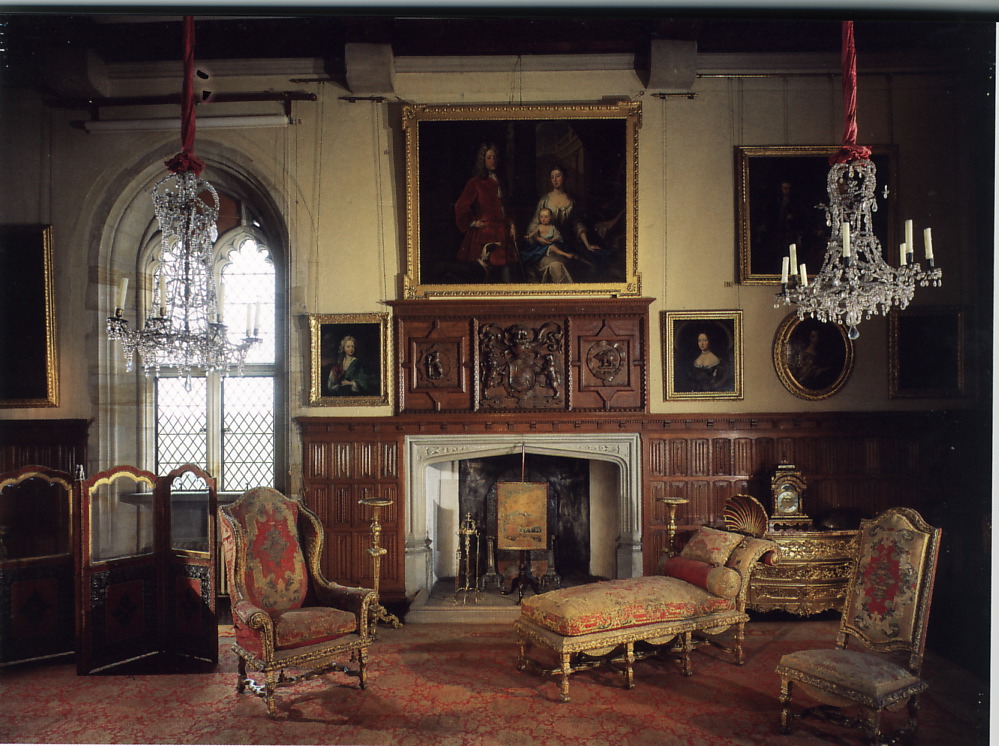
The fabulous furniture of the Queen Elizabeth Room – the Queen held court there when she was at the house.


(CL)

I love this


Upper Long Gallery built in 1601(cl)

Neo Jacobean library in President’s Tower (CL)


The Tapestry Room (CL)


Vaulted Octagon and ground floor corridor (CL)

The Paneled Room in the base of a tower by the Baron’s Hall with a magnificent bed (Penshurst Book)

The Page’s Room  —a 19th century concept to show off the family’s 17th and 18th century porcelain collection (CL)

The remarkable family china on display in the Solar/Dining Room (Penshurst Book)

The Solar/State Dining Room  -- the withdrawing room of the Medieval house

With a history as long as this one, my path was wide open for a dish to share with you that might have been served at Penshurst Place. For me, choosing food to suit a place is like choosing elements for a movie set … you use your imagination to make a connection to the place and the time and the characters (after tons of research).  What could I imagine being eaten at that table?

Here, I see myself walking through the time of the 2nd Earl of Leister in the mid 16th Century when I offer up a stunning preparation for filet mignon (although it would work with any good steak).  The recipe comes under the heading “To Roast a Fillet of Beef” and follows as the second method…  titled “Otherways” Not a sterling heading but what a dish.

Before there were tomatoes for barbeque style sauces there were ‘otherways’ to get the sweet and sour flavor that we crave with meat.  In the mid-17th century, in his brilliant cookbook, The Accomplisht Cook (1660) chef Robert May (I wrote about him HERE used flavored vinegars for the punch… but they were refined, floral vinegars that are easy to copy today.  The result is a delicious filet –– this is seriously sexy beef with the dark sorcery of subtle perfume to the elegant sauce.  Although I didn’t grill it, it would be delicious done that way, basted in butter with a drip pan.  A little smoked salt adds that flavor to the meat.  A second preparation titled equally inauspiciously “or thus” had the filet stuffed with herbs, beets and ‘spinage’ and I decided to serve my beautiful filet on a bed of them instead of using it to stuff the meat.  I used individual filets but a large roast of the whole filet was the way it was originally done.  All in all, a dish fit for meal at Penshurst Place.


To Roast a Filet of Beef “otherways” from the Accomplisht Cook

2 filets of beef
1 T rose-vinegar *
¼ c red wine
1 T elder-vinegar, strained **
pinch of cloves, nutmeg cinnamon, ginger, coriander, fennel seed
Smoked Salt and Pepper to taste

3 T butter
juice of orange ( if you use lemon the sauce will be very sour… I liked orange best)

2 Beets, sliced
1- 2 cups cooked spinach as you would like
loose herbs, strewn artfully (parsley, thyme, savory, marjoram)

Marinate the filets for an hour in the vinegars, wine and spices with salt and pepper.

Heat a skillet till hot (cast iron is good).  Add 1T butter and the steaks and sear, browning well on all sides (I turn them with a tongs – depending on the thickness of the filet, you may want to do the sides as well as top and bottom if they are quite thick).  I cooked mine RARE so when it was browned it was done. Leave it in the pan a little longer for Medium – sautéing more than searing. 

When they are done, remove them to a warmed plate and cover lightly.  Add the rest of the butter and the orange juice and strained marinade to taste (if you want texture and a stronger flavor, don’t strain).  Reduce a little and pour over the steaks on a bed of beets and spinach.

*Rose Vinegar
½ cup white wine vinegar
1-2 t rosewater or 1 drop Aftelier rose essence (available HERE)

**Elder-Vinegar
½ c white wine vinegar
1 t elderflower tea or one tea bag*

Steep the elderflowers in vinegar for a few hours.  I just left mine in and strained it when I needed to use it

Elderflower tea is available at health food stores… make sure you get only elderflowers and not tea with elderflowers – elderflowers are delicious and good for you.  I tried making it using fresh elderflowers but frankly liked the tea version better.

Both vinegars are delicious on salads… especially fruit salads.  I can't recommend Aftelier's Rose enough... it makes everything better.  You really should add her products (there are many HERE like bergamot, jasmine and lemongrass -- all the real deal) to your cooking arsenal... REALLY!!


Thursday, September 27, 2012

Dennis Sever’s House, London and Victorian Apple Fritters with Caramel Ice Cream


Living Room of the Dennis Sever’s House, London, James Brittain photo
The Presidential election is still weeks away and I am drowning in political posturing and unpleasantness.  Honestly, I am sick to death of the tenor of the discourse and wish the candidates, their campaigns and the media would act with some grace and dignity so it wouldn’t feel like I’m watching a feeding frenzy in the piranha pool 24/7. 

When I get sick to death of the world, my imagination looks for an escape and mine came as if by magic when I found a handwritten yellow post-it that a lovely British producer had given me a few months ago.  It had 3 words ––  “Dennis Sever’s House”.  As she wrote she asked if I knew of it and said it was right up my alley –– it certainly was. This was the second time Sever’s House had knocked at my door and the time was right for sharing it with you.  Dennis Sever’s House  is a cure for the gashlycrumb times if ever there was one.

Dennis Severs was born in California, but as a child he had a vision; "Down deep I always believed that one day I would travel past picture frames and into the marinated glow of a warmer, more mellow and more romantic light. There was one such light in particular, one that I saw in the combination of old varnish and paint, and that appealed to me as my ideal. By the age of 11, it was identified as English."

Photos from the Gentle Author of Spitalfields Life 1977

Severs moved to England in 1967 after he graduated from High School and began his immersion into the Victorian lifestyle by buying himself a landau and a much loved horse named Meklenburgh to drive lucky folks around London.  This lasted until his stable was bought out to make way for new construction.  Undaunted he bought the house on Folgate Street in Spitalfields  and never looked back.

A wonderful 1999 obituary in the Guardian quoted Severs saying he didn’t just want to renovate the Spitalfields house but wanted “to bring it to life as my home. With a candle, a chamber pot and a bedroll, I began sleeping in each of the house's 10 rooms so that I might arouse my intuition in the quest for each room's soul.

"Then, having neared it, I worked inside out from there to create what turned out to be a collection of atmospheres: moods that harbour the light and the spirit of various ages in Time."

I knew I’d found a kindred spirit in Mr. Severs when I read in the Guardian article that Severs  “… felt able to summon up past eras not through history books, but through empathy with objects and places, to tell a fictional, true story "aimed at those who want to make sense of the whole picture of being alive".


Photos from James Brittain

The result?  A historian said a walk through the door began  "a magical mystery tour which dazzles the visitor with a succession of scenes more crowded with memorable incident than the mere facsimile of what passes in the museums as a period room". Painter David Hockney described the house as one of the world's greatest works of opera.

The motto of the house is Aut Visum Aut Non (You either see it or you don't).


18 Folgate Street was a decayed 1724 terrace house when Severs found it in a rather notorious part of East London known for Jack the Ripper and Sweeney Todd.  Spitalfields (short for hospital fields) had a short renaissance in the 18th century with an influx of the silk trade to the neighborhood – this where all these great houses were built (the area had had its ups and downs for hundreds of years, Christopher Marlowe had lived there in the 16th century).  When the silk trade waned, the neighborhood became notorious for filth, poverty, debauchery and crime.  Part of Spitalfields was leveled after the Jack the Ripper affair in an attempt to clean the suppurating wound it had become.  It really didn’t help. The plague of poverty continued till recently when again a renaissance has taken over the neighborhood.

Slowly but surely and with enormous creativity and passion, Severs built up the rooms of his house.


Photos from The Gentle Author of Spitalfield's Life
I had forgotten that I had seen bits of the house before in an amazing blog called Spitalfield’s Life  that wrote about and showed the tile work in the house that had been done by the late Simon Pettets.  The tiles looked ancient but were newly made and full of whimsy since they captured the local personalities of the neighborhood, often anachronistically.  When I read this blog I sent links to a million friends because I thought it was so wonderful –– friends sent it out to other friends and I actually got notes from people I didn’t know to thank me for sharing it!  That’s the magic of Dennis Severs house.  I discovered the tiles are only a part of the story when I went to their website and read articles about the place.  

This is the same passion for the drama of place that gave us the screamingly innovative Sleep No More version of Macbeth –– an interactive play performed in a decoratively nuanced, multi-roomed space in which the audience walks through the rooms to take part in the scenes instead of sitting in a seat –– it was a huge hit because the audience became one with the story.  Dennis Severs House draws you in in much the same way.  I think we all want to step through the looking glass every once in a while.

To share his delight in his home with others Severs opened his treasure to the public and even invented a family to occupy it to make people feel the experience more profoundly as they related to the “inhabitants’ within their home.  Although never seen, the Jervis family of silk merchants seem as if they just left the room one enters, their perfume lingers in the air and the food on the table is still warm and fragrant.  Tasks have just been finished or are in the midst of being accomplished.

The house charts the trajectory of the inhabitants from the well-polished and provisioned golden days of the 18th century to the grim lives of poor attic tenants in the mid-19th century ––  complete with dust, ragged clothes, broken crockery, holes in the ceiling and a note explaining the family has gone to William IV’s 1837 funeral accompanied by the faint sound of church bells ringing (there is a delicate soundtrack to the house –– silent viewing is encouraged that you may hear it).  There is a fire in the kitchen and food and flowers on the table, there are scents and sounds in the house. Windows are closed to the outside world and candles and fireplaces provide light so the magic of being transported to the past is preserved.


GoLondon explained,  “It is difficult to describe but you do feel you are in a different time inside the House. There are ten rooms to explore and each looks like a real home, with full domestic trappings. You need to be willing to meet it halfway as a visit here is about using all of your senses and discovering for yourself. No one tells you which room you are in but you need to look around and work out who lives there. It's dark inside - remember it is only lit by candlelight - but there are plenty of clues to help you find out more about the family.”

Photos from James Brittain

Since the house uses food to help tell the story of the Jervis family, I thought I would offer a recently discovered dish that might have been served there. 

When I wrote about Edith Wharton, I enjoyed reading her mother’s favorite Francatelli cookbook and found some gorgeous recipes.  Francatelli learned to cook with no less than Carême in France, was Queen Victoria’s chef, cooked at the legendary Reform Club kitchen and wrote some fine cookbooks (I’ll write more about him soon). 

A recipe caught my eye because it was so unusual and sounded amazing.  It was a fritter batter with ale and orange liqueur coating apples marinated in cognac and orange rind and it sounded divine and perfect for apple dunking.  I served it with my new favorite ice cream recipe (that I have made many, many times since I first shared it with you as a layer of an ice cream bombe HERE–– I am crazy about this ice cream) but they would be great with cheese or even as a side to a pork roast. The fritters are  boozy, wonderfully so.  You will love snacking on them.  Although best hot, they are good at room temperature.  I couldn’t help but rename them tipsy fritters because when they are fresh they pack quite an alcoholic punch.


Tipsy Apple Fritters

1 large crisp apple (like Granny Smith), sliced, cored and peeled ( I had about 16 pieces)
2 oz brandy
2 T sugar
rind of 1 orange, grated

Batter

1 c flour, sifted
2 1/2 to 3 T curacao or grand marnier or triple sec (to your taste)
pinch of salt
1 oz melted butter
1/3 c bitter ale
1 egg white, beaten till stiff

oil or lard for deep frying.
Powder sugar or sanding sugar for dusting


Take the sliced apples and marinate them for a few hours in the brandy, sugar and orange rind, stirring occasionally.

Combine the flour, grand marnier, salt, butter and ale.  Stir well to combine.   Fold the egg white into the batter.

Dry the apple slices* and then dunk the apple pieces into the batter one by one and put into the oil (2 forks seem to work best for this –– drip off as much batter as possible while keeping them covered, this takes a few practice pieces but then it goes fairly easily).  Fry till crisp and golden and put on paper towels.  Sprinkle with sugar and serve with caramel ice cream.

PS I made my first batch with more Grand Marnier and in lard and the second batch with less liqueur and in oil... both were great.  The lard version was gutsier.


*If you don't dry the apples they are boozier and make wild creatures since the batter slips and slides on them


Caramel Benedictine Ice Cream  (with a little help from Epicurious)

1 ¼ c sugar
2 ¼ c heavy cream
½ to 1 t flaky sea salt
½ t vanilla
1 c whole milk
3 large eggs.
1-2 T Benedictine

Heat 1 c sugar in skillet, stirring till it melts.  Then stop and let it turn to dark amber… do not overcook, it turns quickly.  If you are using a cast iron skillet it will retain heat.  Add  1 ¼ c cream slowly, stirring.  Add the salt and vanilla.

Bring milk, the rest of the cream and ¼ cup sugar just to a boil. Whisk eggs and pour the hot milk in a stream.  Pour back into a saucepan and heat to 170º over low heat.  Strain.  Add to cooled caramel and Benedictine and chill 3 hours. Put in an ice cream maker… it will still be a soft ice cream.

This time I cooked the caramel a bit less than usual.  I liked the darker one better... slightly bitter, but that is up to you.


Follow Me on Pinterest